


Key Takeaways
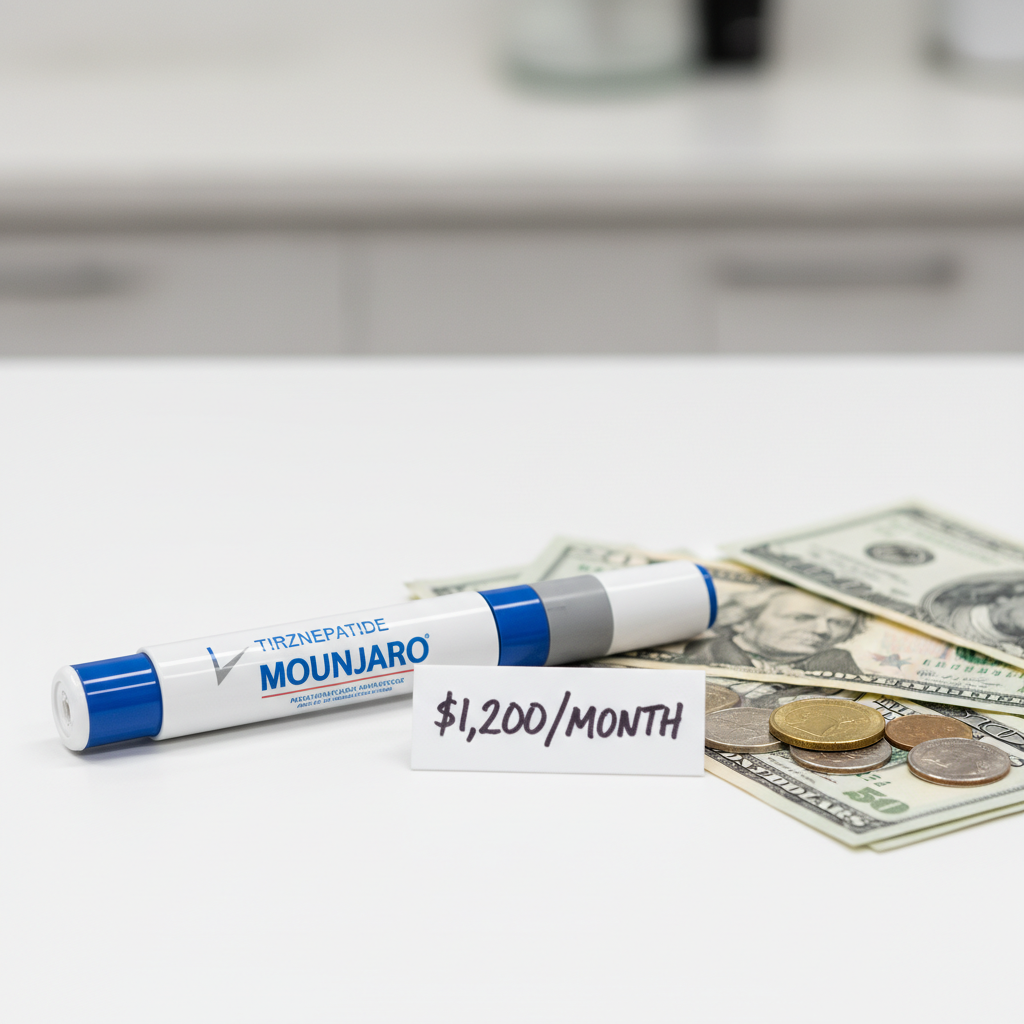
• Tirzepatide costs vary depending on brand, dosage, pharmacy, and insurance coverage, with brand-name versions often costing over $1,000 per month without insurance.
• Insurance plans, manufacturer savings programs, and pharmacy discounts can significantly reduce out-of-pocket costs for eligible patients.
• Lower-cost alternatives such as telehealth treatment plans or compounded versions may exist, but pricing and quality can differ substantially.
Overview
Navigating tirzepatide costs can feel daunting, whether we’re evaluating Mounjaro or Zepbound. As interest in GLP-1 drugs surges, understanding the price tags attached to these therapies is critical for anyone considering treatment. In this article, we break down retail pricing by brand, insurance coverage nuances, savings programs, compounded options, real-world out-of-pocket scenarios, pharmacy price variation, and the broader pricing trends shaping the landscape.
Retail pricing by brand
When we look at manufacturer set list prices, a one-month supply of Mounjaro pens typically runs about $1,079.77, while Zepbound pens are priced at roughly $1,086.37 per month in the United States. These pens deliver four injections over 28 days, and they remain the most common form physicians prescribe.
Beyond pens, Zepbound single-dose vials offer another way to dose tirzepatide. Through Lilly’s Self Pay Journey Program on LillyDirect, patients can secure the 2.5 mg vial for $299 per month, the 5 mg vial for $399, and all higher doses at $449 per month (Lilly). If we step outside that program, regular retail prices climb considerably: the 7.5 mg vial lists at $599, 10 mg at $699, 12.5 mg at $849, and 15 mg at $1,049 per month. Whether pens or vials make the most sense will depend on dosing flexibility, injection preferences, and cost considerations.
For a broader primer on trademarked and generic identifiers, check out our guide on tirzepatide brand names. And if you’re weighing GLP-1s side by side, you might find our comparison of tirzepatide vs semaglutide helpful before making a choice.
Insurance coverage insights
Coverage for tirzepatide varies widely across plans, and navigating benefit details can feel like decoding a puzzle. In the commercial insurance world, many plans cover tirzepatide once a prior authorization is approved. That process often involves a healthcare provider submitting clinical documentation – such as a letter of medical necessity – to justify why it is the appropriate treatment for weight management or type 2 diabetes. If you’re already on semaglutide and thinking about switching, the prior-authorization workflow will look similar to the steps outlined in our guide on switching from semaglutide.
Government programs tend to have more restrictive policies. Medicare generally does not cover the drug for weight-loss indications, and Medicaid coverage depends heavily on state rules. Even when these plans list tirzepatide on their formularies, beneficiaries are excluded from manufacturer savings card programs, which can drive out-of-pocket costs much higher than under commercial plans. We recommend checking with your plan directly to understand specialty drug tiers, coinsurance requirements, or any step-therapy mandates that might apply.
If a prior authorization is denied, there’s still a path forward. Patients and providers can submit appeals, often supplying supplemental medical records or peer-reviewed evidence to support the clinical case. While appeals can take several weeks, persistence can pay off, especially when the med has been effective in managing blood sugar or weight in a given patient.
Cost-saving coupons and programs
Any time we can shave hundreds of dollars off our monthly prescription, it’s worth investigating manufacturer programs and coupons. For Zepbound, the official Savings Card program lets eligible commercially insured patients reduce their copay to as little as $25 per month, subject to monthly and annual caps (Lilly). It’s important to enroll right away and refill within each program period to lock in that rate, because missing a window can trigger full list-price charges until you requalify.
Uninsured patients or those whose plans don’t allow savings cards have an alternative through LillyDirect Self Pay Pharmacy Solutions. Depending on your dose, this service can offer estimated savings up to $469 per month compared with buying at a retail pharmacy. We’ve found that signing up online is straightforward, and shipping is discreet and reliable.
Beyond manufacturer programs, private telehealth providers sometimes bundle GLP-1 prescriptions into membership services that negotiate lower rates with pharmacies. If you’re open to virtual care, it’s worth asking whether a provider you trust offers an integrated cost-saving solution.
Compounded versions
Compounding pharmacies have started offering custom-dose tirzepatide, which can be a lower-cost option for patients on stable doses that don’t match the fixed increments of commercial pens or vials. Typically, compounded formulations run in the $500 to $800 per month range, though exact pricing depends on the pharmacy’s sourcing and markup.
While compounded tirzepatide can feel like an appealingly flexible and budget-friendly alternative, it comes with trade-offs. Compounded products aren’t FDA-approved, so there can be variability in potency, shelf life, and sterility. Some insurance plans won’t cover compounded versions at all, so you may still end up paying entirely out of pocket. If you’re considering this route, we suggest verifying the pharmacy’s accreditation and asking for a certificate of analysis to confirm quality standards.
Out-of-pocket monthly cost scenarios
Real-world cost for tirzepatide can look very different depending on our coverage design and dose. If our commercial plan covers Zepbound and we enroll in the Savings Card program, our out-of-pocket expense could drop to just $25 per month – a remarkable reduction from list price. For many of us, that makes continuous therapy far more sustainable.
On the other hand, commercially insured patients whose plans cover tirzepatide but do not allow card discounts may face mid-range out-of-pocket costs. Depending on deductibles and coinsurance rates, this can translate to anywhere from $300 to $600 per month for vials, or more than $1,000 if we choose pens and haven’t yet met our deductible.
Those without commercial coverage can still find relatively affordable paths by self-paying for Zepbound vials through LillyDirect. With vial prices starting at $299 for the 2.5 mg dose and topping out at $449 for higher doses, this option keeps our cost below the pen list prices, which hover just above $1,080 per month for four pens. Even if we pay in cash, vials can slice our expenditure by more than half compared with buying pens retail.
Costs at major US pharmacies
Pharmacy markups and location-based pricing can introduce significant variation in what we pay for pens. The following table shows typical price ranges for a four-pen supply at several large U.S. pharmacy chains as of late 2025:
| Brand | Price range (four pens) | Pharmacies |
|---|---|---|
| Mounjaro | $1,117 – $1,292 | Walgreens, CVS, Walmart, Kroger |
| Zepbound | $1,271 – $1,297 | Walgreens, CVS, Walmart, Kroger |
(Source: Ro)
Prices can cycle weekly or monthly based on regional purchasing agreements, so we recommend checking GoodRx, pharmacy discount cards, or each chain’s mobile app for the latest quotes. Small differences per pen can add up over a full treatment course, so comparison shopping is well worth the few minutes it takes.
Trends in tirzepatide pricing
Looking ahead, manufacturers and payers are under growing pressure to make weight-loss medications more accessible. In late 2025, Eli Lilly cut prices on Zepbound single-dose vials to expand obesity treatment options and reduce out-of-pocket burden. We expect that additional dose formats, such as higher-concentration pens or extended-release injectables, could emerge with their own pricing strategies.
International comparison data highlight how uniquely high U.S. list prices remain. As of mid-2023, a one-month supply of Mounjaro in the Netherlands cost about $444, and in Japan around $319, versus over $1,000 in the U.S. Private insurers and employers negotiate rebates behind the scenes, so the net price can be lower, but transparent out-of-pocket costs still hinge on list prices and plan design.
On the policy front, we’re watching for potential Medicare Part D reforms that could bring coverage for weight-loss drugs or cap out-of-pocket spending on specialty medications. Meanwhile, biosimilar or generic GLP-1 competitors could exert downward pressure on pricing in the next few years. Until then, savvy patients can manage expenses by leveraging savings programs, comparing pharmacy quotes, and exploring compounded options when appropriate.
FAQ
Brand-name tirzepatide often costs around $1,000 to $1,100 per month, depending on dosage and pharmacy.
Some insurance plans cover tirzepatide, especially for diabetes treatment, but weight-loss coverage depends on the specific policy.
Prices differ because some providers bundle medication with consultations, monitoring, or membership services.