


Key Takeaways
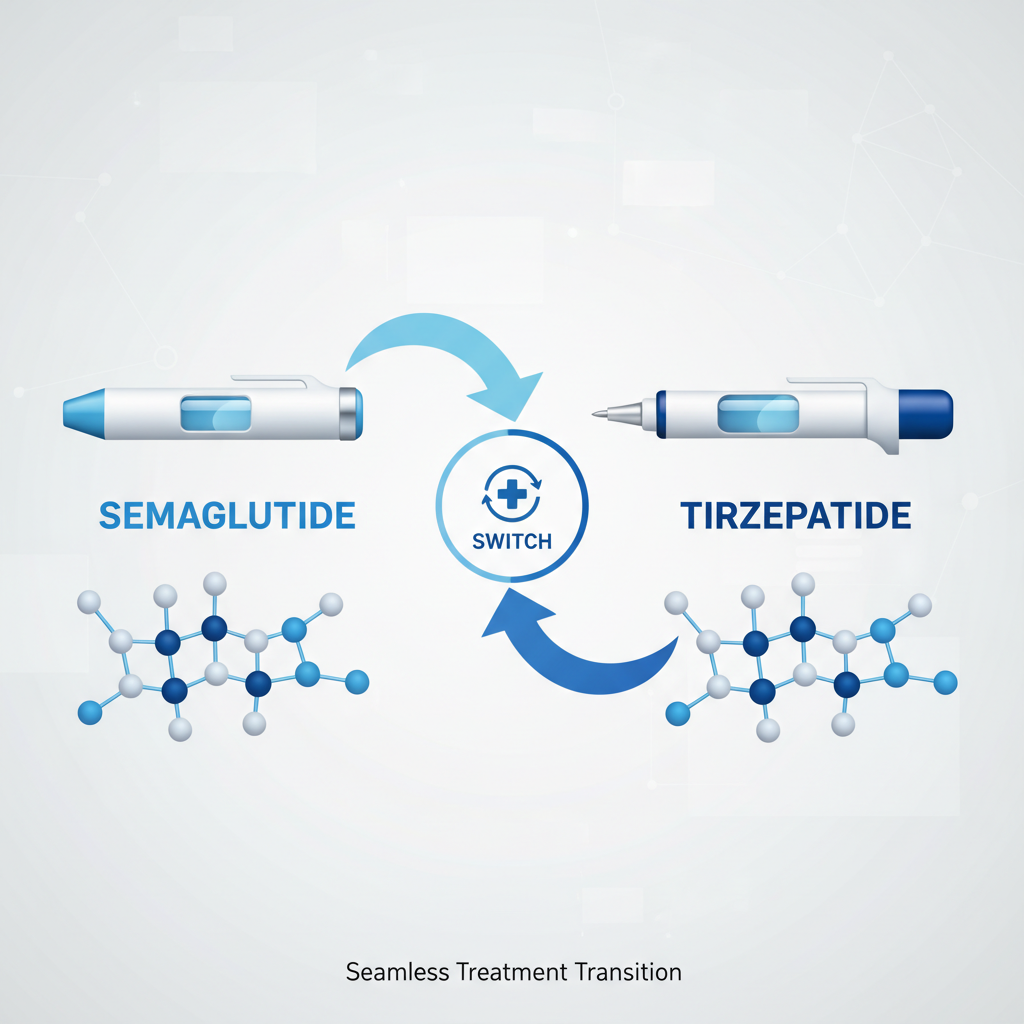
• Switching from semaglutide to tirzepatide is often considered when patients need stronger appetite control, improved blood sugar management, or greater weight loss progress.
• The change is usually made gradually, with tirzepatide starting at a low dose even if semaglutide was previously well tolerated.
• Because the two medications affect the body differently, medical supervision is important during the transition to manage side effects and adjust dosing safely.
Overview
We’ve seen how effective semaglutide can be – injectable options like Ozempic, Wegovy, and Zepbound help many lose up to 15 percent of their body weight by curbing appetite and boosting insulin sensitivity (Mayo Clinic News Network). But for some of us, weight loss plateaus or side effects motivate a change in strategy. That’s where tirzepatide enters the picture as an alternative GLP-1 receptor agonist with dual GIP activity.
In this guide we’re diving into everything you need to know about switching from semaglutide to tirzepatide. We’ll cover the right timing, dosing strategies, expected side effects, how quickly you’ll see results, blood sugar stability, doctor advice, and real patient stories. Let’s explore whether a switch could be the next step on our weight-loss and glycemic-control journeys.
When to consider switching
We usually start thinking about moving from semaglutide when progress stalls or adverse effects outweigh benefits. If you’ve hit a weight-loss plateau despite full titration – or if persistent nausea, gastrointestinal discomfort, or fatigue have become harder to tolerate – the balance might tip toward tirzepatide. Some people also switch because they need stronger glycemic control; clinical trials like SURMOUNT-5 showed tirzepatide can deliver up to 20.2 percent average weight loss versus 13.7 percent with semaglutide, plus additional reductions in HbA1c (Pharmaceutical Journal).
Cost and access can play a role too. Depending on insurance coverage, tirzepatide may be more or less expensive than semaglutide. If you’ve run into supply delays or copay hurdles with semaglutide, investigating online options or finding the cheapest tirzepatide could make the switch more practical. Women in perimenopause and menopause sometimes find tirzepatide’s dual-hormone action helpful for hormonal weight gain challenges.
Before changing treatments, it’s wise to compare profiles on both medications. Our deep dive into tirzepatide vs semaglutide and tirzepatide vs ozempic can help you see how efficacy, side effects, dosing frequency, and price stack up.
Cross-titration dosing tips
Switching between two long-acting incretin drugs requires a thoughtful approach. Both drugs have half-lives around five to seven days, so we can choose between a same-day switch or a brief washout period. Each option has trade-offs: overlapping doses may increase gastrointestinal side effects, while a gap can risk transient loss of glycemic control.
Here’s a quick comparison of strategies:
| Approach | Description | Pros | Cons |
|---|---|---|---|
| Same-day switch | Stop semaglutide one week before initiating tirzepatide at its lowest dose | Continuous incretin effect, fewer gaps | Potential for nausea or diarrhea due to overlapping action |
| Washout period | Allow semaglutide to clear (~4–5 weeks) then begin tirzepatide at the 2.5 mg weekly starting dose | Minimized overlap side effects | Short-term rise in blood sugar, appetite rebound |
After selecting an approach, we always start tirzepatide at its lowest dose – typically 2.5 mg weekly – and increase by 2.5 mg increments every four weeks based on tolerance. Keeping a symptom diary can help us and our care team adjust the pace of up-titration.
What side effects to expect after switching
When we move from med to med, gastrointestinal issues often follow us into the new regimen. We may experience nausea, vomiting, loose stools, bloating, or headaches during the first few weeks. Fatigue and mild dizziness are also common when our bodies adjust to dual GIP and GLP-1 receptor stimulation.
Over time, most people see side effects subside as they acclimate to each higher dose. One trial participant reported less nausea after week four on tirzepatide, compared with their semaglutide experience. Staying hydrated, eating smaller frequent meals, and discussing antiemetic options with our provider can make this adjustment period smoother.
How long before results resume
We’re often eager to know when tirzepatide’s effects kick in after stopping semaglutide. Thanks to overlapping half-lives, appetite suppression generally resumes within two to four weeks. By week eight, many notice fresh weight-loss momentum – a sign that the dual incretin action is engaging.
Glycemic improvements follow a similar timeline. Studies indicate that measurable declines in fasting glucose and HbA1c appear around week 12 once tirzepatide reaches steady-state concentrations. Keep in mind that individual responses vary based on prior dosing, diet, exercise, and baseline metabolism.
Blood sugar stability during the switch
Our main concern during any GLP-1 transition is maintaining stable glucose levels. If you use insulin or sulfonylureas, we recommend more frequent blood sugar checks – potentially daily – until tirzepatide’s effects stabilize. Continuous glucose monitoring (CGM) readers can flag unexpected highs or lows, helping us adjust co-medications in real time.
If you notice rising blood sugars in a washout scenario, simple interventions like modest carb reductions or short-acting insulin adjustments can plug the gap. Conversely, overlapping doses may require us to lower background insulin to avoid hypoglycemia. Communicating these trends promptly to our care team ensures a safe transition.
Doctor recommendations on switching
We always advise consulting your healthcare provider before altering any medication. A clinician will evaluate your treatment history, A1c trajectory, weight-loss progress, and side-effect profile to craft a personalized plan. They may also involve a pharmacist for education on injection technique, dose-escalation timing, and adherence strategies.
Pharmacists play a critical role during switching by guiding patients on what to expect week by week, monitoring for side effects, and structuring follow-up to adjust doses or prevent relapse risk. (Pharmaceutical Journal)
Beyond medication logistics, doctors emphasize lifestyle consistency: balanced meals, regular physical activity, adequate sleep, and stress management remain pillars of lasting success. They may recommend regular lab monitoring – kidney function, liver enzymes, and lipid panels – to ensure we stay on track.
Patient experiences post-switch
Some of our community members report immediate relief from semaglutide’s persistent nausea after moving to tirzepatide’s lower starting dose. One individual shared that starting tirzepatide at 5 mg weekly (instead of the standard 2.5 mg) felt tolerable after two months of semaglutide, but required a slower decline of semaglutide to avoid digestive flare-ups (Mayo Clinic Connect).
Another person saw their A1c improve from 6.8 to 6.2 without significant weight change at first. They noted hunger resurfacing near the end of each dosing interval, a reminder that dose timing can matter as much as amount. Adjusting meals and timing the shot to earlier in the day helped smooth out these peaks.
Slow up-titration emerged as a clear theme. Patients who increased tirzepatide by just 2.5 mg every six weeks often reported fewer side effects and sustained weight loss compared with rapid increases. These real-world insights echo trial data showing personalized dosing can minimize gastrointestinal upset while delivering similar efficacy (EASO).
Switching from semaglutide to tirzepatide can feel like uncharted territory, yet with careful planning, medical support, and peer wisdom, many of us find renewed momentum in weight loss and glucose control. If you think a change might help, start a conversation with your care team, map out a dosing schedule, and lean on community experiences as you embark on this next phase.
FAQ
In many cases, tirzepatide is started around the time the next semaglutide dose would have been due, but the exact timing depends on medical guidance.
Some digestive side effects can reappear during the first weeks of tirzepatide treatment, especially while the body adjusts to the new medication.
Many people experience stronger appetite suppression and weight loss with tirzepatide, although results vary from person to person.