



Key Takeaways
- Semaglutide is a GLP-1 receptor agonist that helps with type 2 diabetes and weight loss by lowering appetite, slowing gastric emptying, and improving blood sugar control.
- In the brain (hypothalamus), semaglutide increases satiety signals (POMC and CART) and reduces hunger signals (NPY and AgRP), which lowers food intake.
- In the pancreas, semaglutide increases glucose-dependent insulin release from beta cells and suppresses glucagon from alpha cells when blood sugar is high, which reduces hepatic glucose output.
We often hear about the semaglutide mechanism in discussions of diabetes and weight loss. As a potent GLP-1 receptor agonist, semaglutide influences multiple physiological pathways, from curbing appetite to enhancing insulin secretion, while offering cardiovascular and renal benefits. In this article, we’ll break down how semaglutide modulates appetite, delays gastric emptying, regulates insulin and glucagon, acts on the brain, and why it works for both diabetes and obesity. Finally, we’ll compare its molecular design to tirzepatide.
How GLP-1 receptor agonists affect appetite
GLP-1 receptor agonists mimic the natural gut hormone glucagon-like peptide-1, binding to receptors in the pancreas and brain. When semaglutide activates GLP-1 receptors in the hypothalamic arcuate nucleus, it stimulates anorexigenic neurons (POMC and CART) and inhibits orexigenic neurons (NPY and AgRP) (PMC). This shift in neural signaling reduces hunger and food intake.
Key appetite effects:
- Increased activity of POMC/CART neurons, which promote satiety
- Suppressed activity of NPY/AgRP neurons, which drive hunger
- Enhanced leptin signaling via JAK/STAT pathways, reducing leptin resistance
Delayed gastric emptying: the satiety effect
Semaglutide slows down gastric emptying by interacting with GLP-1 receptors in the gastrointestinal tract, prolonging the time food remains in the stomach. This delay supports sustained fullness after meals and reduces cravings between eating occasions (NCBI Bookshelf).
Benefits of delayed emptying:
- Extended meal-derived satiety and lower caloric intake
- Diminished postprandial blood sugar spikes
- Gradual nutrient absorption, aiding glycemic control
Users should be aware that slower gastric emptying can lead to gastrointestinal side effects such as nausea or vomiting. For more on managing these reactions, see our guide on semaglutide side effects.
Semaglutide and insulin secretion explained
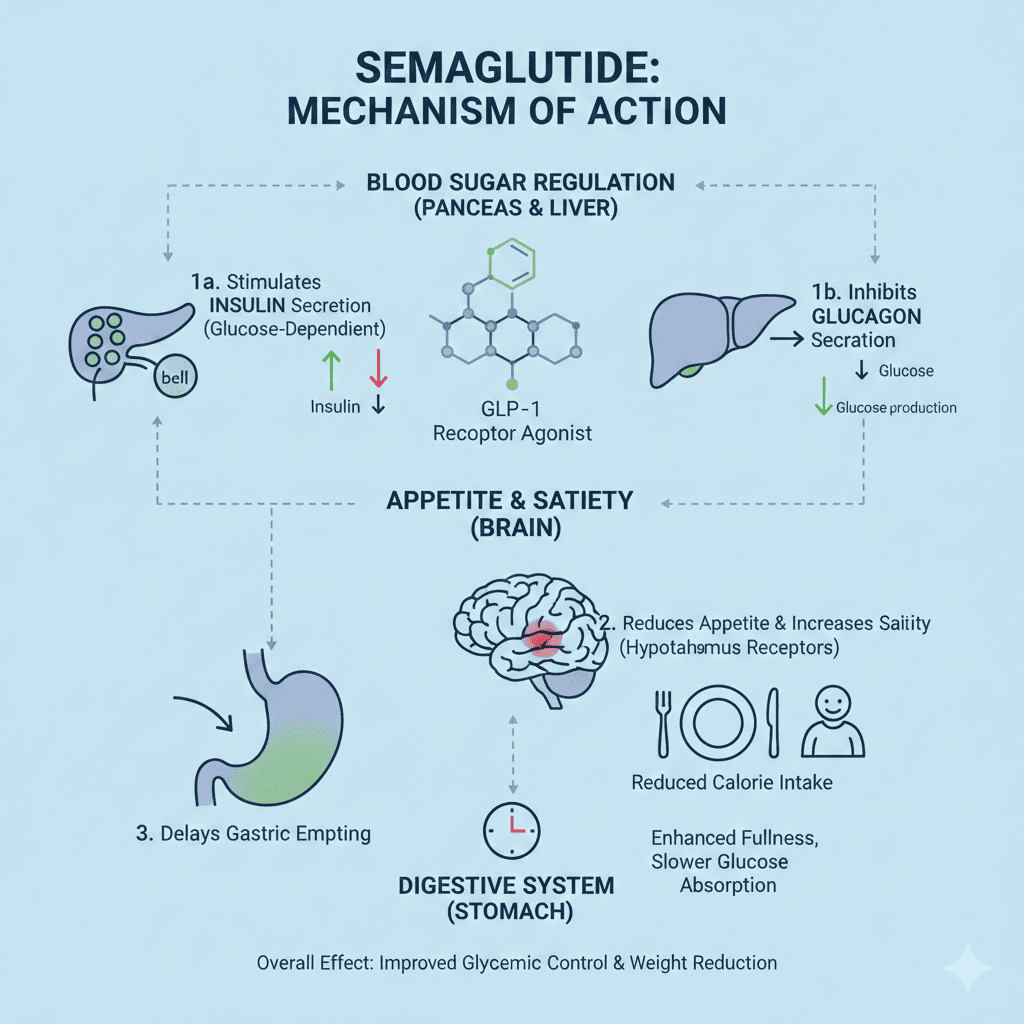
A core component of the semaglutide mechanism is enhancing insulin release in a glucose-dependent manner. By binding to GLP-1 receptors on pancreatic β-cells, semaglutide triggers a cascade that raises cAMP levels, activates protein kinase A, and engages PI3K/AKT signaling (NCBI Bookshelf).
This leads to:
- Increased insulin gene transcription and biosynthesis
- Glucose-stimulated insulin secretion when blood sugar is elevated
- Promotion of β-cell proliferation and reduced β-cell apoptosis
Together, these actions help us and our patients maintain tighter glycemic control with a lower risk of hypoglycemia.
Impact on glucagon suppression
In addition to boosting insulin, semaglutide suppresses glucagon secretion from pancreatic α-cells when blood glucose is high. By inhibiting glucagon release, semaglutide:
- Reduces hepatic glucose production
- Lowers both fasting and postprandial glucagon levels (DrugBank)
- Helps stabilize blood sugar without driving it too low
Balancing insulin and glucagon ensures more consistent glucose homeostasis throughout the day.
How semaglutide influences the brain
Semaglutide exerts direct effects on the central nervous system by crossing the blood-brain barrier and targeting GLP-1 receptors in appetite-regulating centers. Beyond suppressing hunger, research suggests semaglutide may have neuroprotective benefits, such as reducing oxidative stress and supporting mitochondrial health via the AMPK/SIRT1/PGC-1α/NRF2 pathway (PMC).
Brain-related actions include:
- Stimulation of anorexigenic POMC/CART neurons, curbing food intake
- Inhibition of orexigenic NPY/AgRP neurons, limiting cravings
- Modulation of reward pathways, reducing the appeal of high-calorie foods
Why semaglutide works for both diabetes and obesity
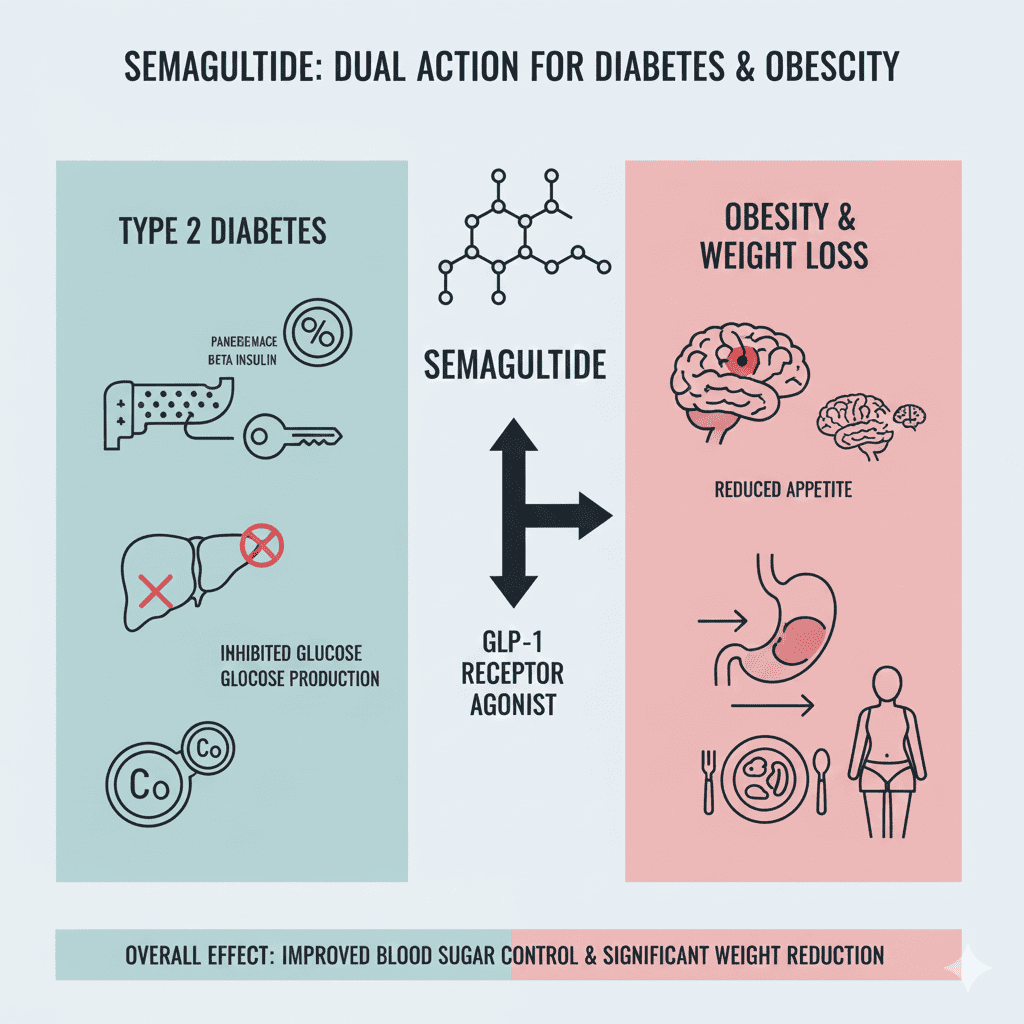
Semaglutide’s multifaceted mechanism makes it effective in treating type 2 diabetes and supporting weight loss:
- Glycemic control through enhanced insulin secretion and glucagon suppression
- Appetite reduction and prolonged satiety via central and gastrointestinal pathways
- Cardiovascular benefits, including improved endothelial function and reduced inflammation (NCBI Bookshelf)
- Potential renal protection by mitigating oxidative stress and inflammation in kidney tissues (Future Science OA)
- Convenient once-weekly administration, supported by high albumin binding that extends the half-life to approximately 168 hours (DrugBank)
Depending on the prescribed regimen, patients can explore different semaglutide brands and dosing schedules. For details on administration and dose adjustments, refer to our semaglutide dosing guide.
Semaglutide vs Tirzepatide: molecular differences
When comparing semaglutide with tirzepatide, structural and receptor-target distinctions shape their clinical profiles:
| Feature | Semaglutide | Tirzepatide |
|---|---|---|
| Receptor target | Selective GLP-1 receptor agonist | Dual GIP and GLP-1 receptor agonist |
| Structural modification | Albumin binding for prolonged half-life | Dual-domain design enabling albumin binding |
| Primary actions | Glycemic control, appetite suppression | Glycemic control, dual incretin effect |
Because tirzepatide engages both GIP and GLP-1 receptors, it may offer enhanced incretin effects in some patients. Should branded options be unavailable, some practitioners consider alternatives through compounding pharmacies. If semaglutide doesn’t meet your treatment goals, explore troubleshooting strategies in our guide to semaglutide not working.
Frequently Asked Questions About the Semaglutide Mechanism of Action
What does semaglutide do in the body?
Semaglutide mimics the gut hormone GLP-1 by activating GLP-1 receptors in the brain, pancreas, and GI tract. This reduces appetite, slows gastric emptying, increases insulin release when glucose is high, and lowers glucagon levels, which helps improve blood sugar control and supports weight loss.
How does semaglutide reduce appetite?
Semaglutide activates GLP-1 receptors in the hypothalamus, including the arcuate nucleus. It increases activity in satiety pathways (POMC and CART neurons) and reduces activity in hunger pathways (NPY and AgRP neurons), which lowers hunger and reduces food intake.
Does semaglutide slow gastric emptying, and why does that matter?
Yes. Semaglutide slows gastric emptying by acting on GLP-1 receptors in the gastrointestinal tract. Food stays in the stomach longer, which can increase fullness after meals, reduce cravings between meals, and blunt postprandial (after eating) blood sugar spikes. This same effect can also contribute to nausea or vomiting in some people.